
Tennessee is earning a reputation as one of the most tiny-home-friendly states in the Southeast. With affordable land, diverse climates, and a patchwork of zoning regulations that range from restrictive to wide-open, the Volunteer State offers plenty of opportunities for downsizers, minimalists, and people seeking financial freedom through smaller-footprint living. But before anyone hitches a tiny house on wheels (THOW) or pours a foundation for a micro-dwelling, they need to understand local codes, site options, and practical considerations like utilities and financing. This guide walks through what makes Tennessee attractive for tiny home enthusiasts, and what pitfalls to watch for.
Table of Contents
ToggleKey Takeaways
- Tiny homes in Tennessee benefit from affordable land (often under $20,000), mild climate, and growing cultural acceptance, making the state an attractive hub for downsizers and minimalists seeking financial freedom.
- Tennessee has no statewide tiny home law, so zoning regulations vary dramatically by county and township—always verify with your local building department before purchasing or building, as single-family zones often enforce 600–1,000 sq ft minimums while agricultural zones may allow mobile homes with fewer restrictions.
- Financing tiny homes on wheels typically requires RV loans (5–9% APR), personal loans (8–12%), or chattel loans from credit unions, since traditional mortgages rarely apply unless the home has a permanent foundation.
- Unincorporated counties like Giles, Lawrence, and Sequatchie offer minimal zoning enforcement and lower costs, while emerging tiny home communities near Chattanooga and Franklin provide structured developments with clear financing paths and shared amenities.
- Off-grid setups for Tennessee tiny homes are practical with 200+ sunny days annually; budget $12,000–$18,000 for solar with battery backup and include backup systems (propane, generators) to handle humid summers and ice storms.
Why Tennessee Is Perfect for Tiny Home Living
Tennessee’s cost of living sits well below the national average, and raw land runs cheap in rural counties, especially in the Cumberland Plateau and western hill country. Buyers regularly find buildable lots under $20,000, sometimes with power and well access already in place. The state’s mild four-season climate means heating and cooling loads are manageable: winters rarely dip below the mid-20s in most regions, and summers, while humid, don’t require the oversized HVAC systems needed in desert or Gulf Coast states.
Cultural acceptance is growing, too. Nashville’s housing crunch has nudged city planners toward accessory dwelling units (ADUs) and infill development, while Chattanooga and Knoxville attract remote workers who value walkability and lower overhead. East Tennessee’s mountains draw tiny-home builders seeking off-grid potential, and Middle Tennessee’s farm country welcomes agritourism ventures that often include tiny-home rentals. That said, acceptance varies sharply by county. Metropolitan areas tend to enforce stricter minimum square footage rules, while unincorporated townships may have no building department at all, a double-edged sword that offers freedom but zero guidance.
Tennessee Tiny Home Laws and Zoning Regulations
Tennessee has no statewide tiny-home statute. Regulations cascade from county to county, and even township to township within the same county. Most jurisdictions peg minimum dwelling sizes to the International Residential Code (IRC), which sets a floor of 120 square feet for habitable rooms. Some counties interpret that as a 120-square-foot total, others require 120 square feet per room, effectively mandating homes closer to 400 square feet when bedroom, kitchen, and bath are factored in.
Zoning determines where a tiny home can legally sit. Single-family residential (R-1) zones typically enforce minimum square footage, often 600 to 1,000 square feet, and prohibit wheels-on structures as primary dwellings. Agricultural (A) and rural residential (RR) zones are more permissive: many allow “farm outbuildings” or “recreational vehicles” without size minimums, provided they’re used seasonally or as secondary structures. Anyone planning to live full-time in a tiny home on wheels should confirm the county doesn’t classify it as an RV subject to 180-day occupancy limits.
Some Tennessee cities have carved out tiny-home-friendly ordinances, permitting THOWs as ADUs or allowing “pocket neighborhoods” of clustered small dwellings. Always verify current rules with the local building department, code officers have wide discretion, and what’s allowed in one part of the county may be forbidden ten miles away.
Building Codes and Certification Requirements
If the tiny home has a permanent foundation, it’s subject to the IRC as adopted by the county. Inspectors will check framing, electrical (per National Electrical Code), plumbing, egress windows, ceiling height (minimum 6 feet 8 inches in habitable rooms, 6 feet 4 inches in bathrooms), and loft ladder or stair requirements. Mobile tiny homes fall under RVIA (Recreational Vehicle Industry Association) standards if the builder seeks that certification, or NOAH (National Organization of Alternative Housing) certification for park models. Neither guarantees a county will permit full-time occupancy, but both signal the structure meets baseline safety and construction standards. Tennessee’s Department of Commerce & Insurance doesn’t pre-approve tiny homes: enforcement happens at the local level.
Best Places to Park or Build Your Tiny Home in Tennessee
Unincorporated counties in Middle and East Tennessee, Giles, Lawrence, Sequatchie, Rhea, have minimal zoning enforcement and attract tiny-home owners seeking privacy and low land costs. Lot sizes often start at five acres, providing room for gardens, workshops, and solar arrays. Buyers should verify well permits and septic system requirements: Tennessee Department of Environment and Conservation mandates soil percolation tests before issuing septic permits, and some clay-heavy soils fail.
Tiny-home communities are sprouting near metro areas. Creekside Tiny Homes in Chattanooga and The Preserve in Franklin offer rentals and purchase lots with shared amenities and clear title for financing. These developments navigate zoning by clustering homes under planned unit development (PUD) ordinances or RV park licenses.
Private land-lease arrangements are common in rural Tennessee. Landowners let tiny-home dwellers park on agricultural parcels in exchange for property maintenance, farm help, or monthly rent. Written lease agreements are critical, verbal handshakes won’t satisfy lenders or insurance companies. Confirm the landowner’s zoning allows the arrangement and that utilities can be legally extended to the site.
RV parks and campgrounds sometimes permit long-term tiny-home placement, especially in tourist zones near the Smokies or TVA lakes. Expect to pay $300–$600/month for a pad with water, electric, and sewer hookups. Check park rules: many prohibit structural additions like decks or permanent skirting, which limits customization.
Buying vs. Building a Tiny Home in Tennessee
Buying turnkey eliminates construction headaches. Established builders like Tennessee Tiny Homes (Cookeville) and New Frontier Tiny Homes (Nashville) deliver certified THOWs in the $50,000–$90,000 range, typically built on dual-axle trailers with spray-foam insulation, LP SmartSide siding, and residential-grade windows. Buyers get warranties, known resale value, and homes that meet RVIA or NOAH standards. Financing is trickier, banks often classify tiny homes as vehicles rather than real estate, pushing buyers toward RV loans or personal loans with higher interest rates.
Building custom offers full design control and potential cost savings, but requires tools, skills, and time. A DIY build on a 20-foot trailer (7,000-pound GVWR minimum) runs $20,000–$40,000 in materials, assuming the builder handles framing, electrical, and plumbing personally. Trailer cost: $4,000–$6,000 for a new steel frame with brakes and tiedowns. Framing lumber: Budget $2,000–$3,000 for 2×4 studs and engineered floor joists rated for road travel. Exterior sheathing: LP SmartSide or T1-11 adds $1,500. Windows and doors: $2,000–$4,000 for dual-pane units. Electrical: $800–$1,200 for wire, breaker panel, outlets, and fixtures: hire a licensed electrician for final connections if code requires.
Custom-built tiny homes let owners prioritize features, standing-seam metal roofs for durability, propane appliances for off-grid capability, or cork flooring for sound damping. Trade-off: resale value hinges on build quality and documentation, and lenders rarely finance owner-built structures without third-party inspections.
Financing Your Tennessee Tiny Home
Traditional mortgages don’t apply unless the tiny home sits on a permanent foundation and meets county minimum square footage. For THOWs, three paths dominate:
RV loans treat the home as a vehicle. Rates run 5–9% APR for 10–15 year terms, and lenders cap loan-to-value at 80%. LightStream and Essex Credit are active in Tennessee: both require credit scores above 650 and verifiable income.
Personal loans offer faster approval but higher rates (8–12%) and shorter terms (5–7 years). Monthly payments climb, making affordability tight for builds over $50,000. Best for buyers with strong credit who plan to pay off quickly.
Chattel loans (property loans not tied to land) are emerging from credit unions. Tennessee Valley Federal Credit Union and Ascend FCU have piloted programs: expect 6–8% rates with 15–20% down.
Some buyers tap grant programs or rural housing initiatives. USDA Section 502 loans fund homes in eligible rural areas if the structure meets IRC minimums, which often means foundation-based builds of 400+ square feet. Tennessee Housing Development Agency (THDA) offers down-payment assistance for first-time buyers, but tiny homes on wheels typically don’t qualify.
Cash purchases remain most common. Builders and buyers avoid interest, close faster, and sidestep lender restrictions on non-traditional housing.
Utilities and Off-Grid Options for Tennessee Tiny Homes
Grid-tied setups are straightforward where infrastructure exists. Tennessee’s rural electric co-ops, Middle Tennessee EMC, Volunteer Energy, Duck River EMC, serve most counties and charge $500–$1,500 for new meter installations, depending on distance from the nearest transformer. Request 200-amp service even for a tiny home: it future-proofs the site for workshop tools or EV charging. Municipal water and sewer availability drops off fast outside city limits.
Wells and septic are the norm in unincorporated areas. Drilled wells cost $15–$30 per foot: depths range from 100 feet in valley floors to 300+ feet in ridge terrain. Budget $3,000–$8,000 total. Septic systems require permits, soil tests, and licensed installers. A basic single-chamber tank and drainfield runs $4,000–$7,000. Composting toilets, Nature’s Head or Sun-Mar models, eliminate septic needs but require regular maintenance and aren’t legal in all zones as sole waste systems.
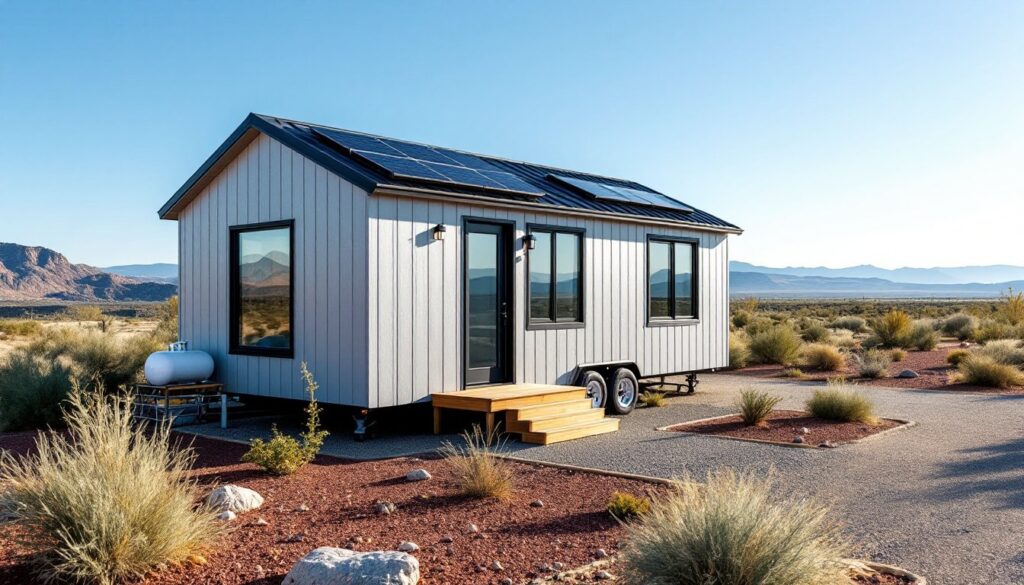
Off-grid power is viable in Tennessee’s 200+ sunny days per year. A 3-kilowatt solar array with battery backup (SimpliPhi or Discover lithium banks) costs $12,000–$18,000 installed and powers LED lighting, a mini-split heat pump, and 120V outlets. Propane supplements solar for cooking, water heating, and backup heat: a 500-gallon tank runs $1,200–$1,800 (lease or purchase). Rainwater harvesting is legal but requires filtration and UV treatment for potable use. A 1,000-gallon cistern with pump and filter setup costs $2,500–$4,000.
Anyone serious about off-grid living should plan for redundancy, backup generator, dual fuel sources, and water storage for dry spells. Tennessee’s humid summers and ice storms demand resilient systems that don’t rely on a single utility.