
Detroit isn’t just bouncing back, it’s redefining what urban living can look like. With vast tracts of underutilized land, affordable property prices, and a city government actively experimenting with alternative housing models, the Motor City has become an unlikely hotspot for tiny home buyers. Whether someone’s looking to downsize, invest in rental income, or simply embrace a minimalist lifestyle, Detroit offers opportunities that would cost triple in coastal markets. This guide walks through everything a prospective buyer needs to know about purchasing a tiny home in Detroit in 2026, from zoning headaches to where the best deals hide.
Table of Contents
ToggleKey Takeaways
- Tiny homes for sale in Detroit can cost as little as $60,000–$110,000 total, a fraction of typical U.S. home prices, thanks to affordable land ($1,500–$20,000) through the Detroit Land Bank Authority and builder-grade models starting around $40,000.
- Detroit’s zoning is more flexible than most cities, allowing foundation-built tiny homes to be treated as standard dwellings if they meet 400+ square-foot minimums and comply with setbacks, while THOWs must be placed on permanent foundations to avoid RV restrictions.
- Winterization is critical in Detroit; look for R-20+ wall insulation, R-30+ roof insulation, triple-pane windows, and reliable backup heating to survive January lows averaging 18°F and occasional sub-zero temperatures.
- Utility hookups (water, sewer, electric) can run $5,000–$15,000 depending on distance to mains, and site prep costs ($800–$6,000) are often underestimated by first-time tiny home buyers.
- Financing options for tiny homes on wheels include RV loans or personal loans at 6–10% interest, while foundation-built models meeting IRC codes can qualify for conventional mortgages through credit unions and traditional lenders.
- Detroit’s active tiny home community, nonprofit programs, and local builder networks like Michigan Tiny Homes provide essential support for permit navigation, contractor referrals, and shared resources for successful builds.
Why Detroit Is a Hot Market for Tiny Homes
Detroit’s comeback story is built on affordability and space, two things tiny home buyers desperately need. The city has roughly 40 square miles of vacant land, much of it former industrial or residential parcels that have been cleared or abandoned. That’s more land than San Francisco and Manhattan combined.
Unlike densely packed metro areas where a tiny home lot might run $150,000, Detroit offers vacant parcels for as little as $500 to $5,000 through the Detroit Land Bank Authority. This makes it feasible to buy land and place a tiny home for a total investment well under $75,000, a price point that’s vanished from most U.S. housing markets.
The city’s Live6 and Rehabbed & Ready programs have also opened doors for alternative housing. Detroit’s planning department has been more flexible than most municipalities about accessory dwelling units (ADUs) and infill development, provided buyers meet basic safety and zoning requirements. That regulatory breathing room is rare.
Add in a growing arts scene, revitalized neighborhoods like Corktown and Midtown, and a community of DIYers and urban homesteaders, and Detroit becomes more than just cheap, it becomes viable. Tiny home communities are popping up in pockets across the city, often as part of cooperative land trusts or intentional neighborhoods.
Types of Tiny Homes Available in Detroit
Tiny homes come in several flavors, and Detroit’s market reflects that diversity.
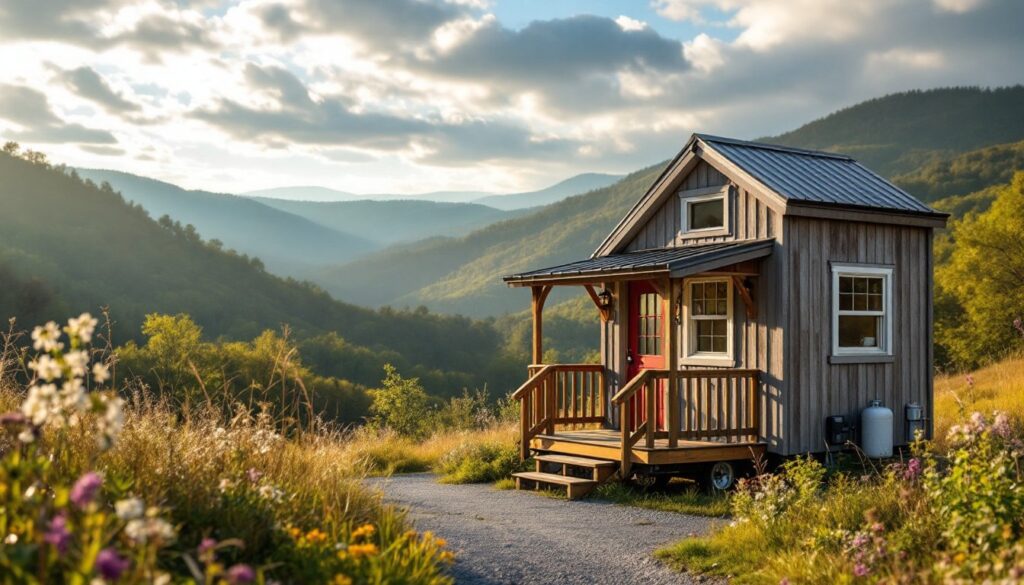
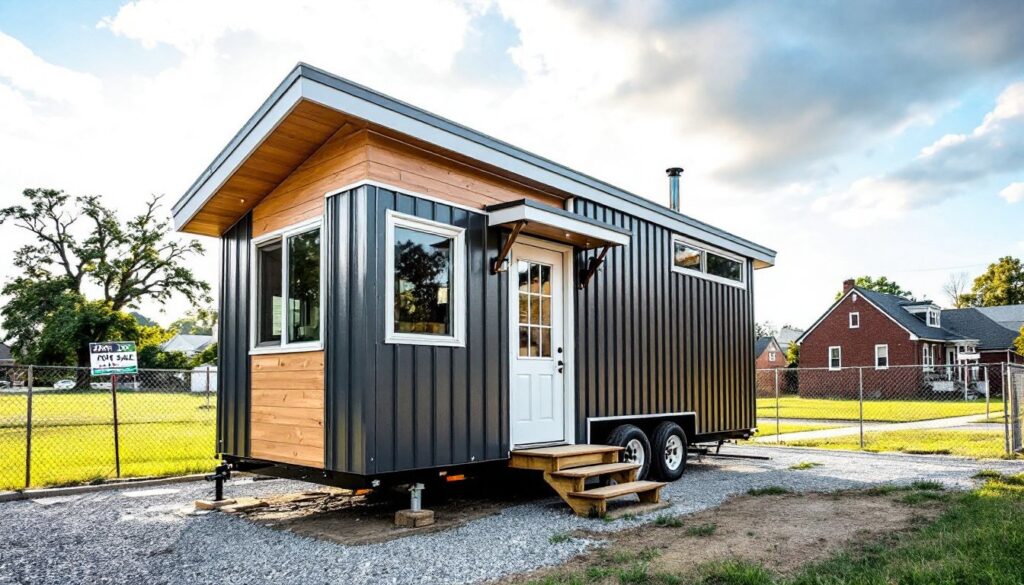
Tiny homes on wheels (THOWs) are the most common type nationally, built on trailers and classified as RVs. In Detroit, these typically range from 100 to 400 square feet and can be moved if zoning or life circumstances change. They’re popular with buyers who want flexibility, but Detroit’s winter climate demands serious insulation, look for models with spray foam, double-pane windows, and skirting options.
Foundation-built tiny homes are permanent structures, usually 400 to 800 square feet, placed on a concrete slab or pier foundation. These qualify as traditional dwellings under the International Residential Code (IRC) and can be financed with standard mortgages if they meet local building codes. Foundation models are the better choice for year-round living in Detroit’s freeze-thaw cycles.
Prefab and modular tiny homes are factory-built in sections, then delivered and assembled on-site. Brands like Boxabl and Tumbleweed offer models that ship to Michigan. Prefabs cut construction time and often come with warranties, but buyers need to confirm that the manufacturer’s specs meet Michigan’s building codes before ordering.
Converted shipping containers also show up in Detroit’s market, particularly in creative neighborhoods. A 20-foot container provides about 160 square feet: a 40-footer doubles that. Container builds require welding, insulation, and serious HVAC planning, but they’re durable and theft-resistant, an asset in transitional neighborhoods. Apartment Therapy has featured several Detroit container projects showcasing clever space-saving layouts.
ADUs (accessory dwelling units) are small, secondary structures on an existing residential lot. Detroit allows ADUs in many single-family zones, provided they don’t exceed 1,000 square feet and meet setback rules. This is a solid option for someone who already owns a Detroit lot or wants to add rental income.
Where to Find Tiny Homes for Sale in Detroit
Finding a tiny home in Detroit requires a mix of traditional real estate channels and alternative networks.
Detroit Land Bank Authority is the first stop for land. The DLBA auctions off city-owned vacant lots regularly, with bidding starting as low as $1,000. Buyers can browse available parcels online, and many are already cleared and ready for building. Purchasing through the DLBA requires a commitment to develop the property within a set timeframe, typically 6 to 24 months, so don’t buy unless construction is ready to roll.
Tiny home builders and dealers operating in Michigan include Michigan Tiny Homes, Incredible Tiny Homes, and Mint Tiny House Company. These outfits offer both pre-built models and custom builds. Expect lead times of 3 to 9 months for a custom order, longer if supply chain hiccups resurface. Always tour a finished model if possible and request references from past buyers.
Facebook Marketplace, Craigslist, and Tiny House Listings are where used THOWs show up. Prices for used models typically range from $30,000 to $60,000, depending on age, size, and quality. Inspect any used tiny home thoroughly, check for water damage, roof leaks, and trailer frame rust. Bring someone who knows RV or residential construction if possible.
Tiny home communities like Cass Community Social Services’ Tiny Homes Detroit operate on a lease-to-own model, targeting low-income buyers. These programs bundle the home, land, and support services, but eligibility is often restricted. Checking in with local nonprofits and CDCs (community development corporations) can uncover similar opportunities.
For those searching in other states, tiny homes for sale in Kansas City and Pennsylvania’s tiny home market offer alternative regional comparisons.
What to Expect: Pricing and Budget Considerations
Budget planning for a Detroit tiny home breaks into three chunks: the structure, the land, and the hookups.
Tiny home purchase prices vary widely. A basic THOW starts around $40,000 to $50,000 for a builder-grade 200-square-foot model. Mid-range custom builds with high-end finishes (butcher block counters, composting toilets, off-grid solar) run $70,000 to $90,000. Luxury or architect-designed models can hit $120,000+, though at that price point, a buyer might as well consider a small traditional home.
Land costs in Detroit are shockingly low compared to national norms. Vacant lots through the DLBA average $1,500 to $3,000. Private-market parcels in stable neighborhoods like Grandmont Rosedale or East English Village range from $8,000 to $20,000. Factor in $500 to $1,500 for title search, survey, and closing costs.
Utility hookups are where costs creep up. Running water, sewer, and electric to a vacant lot can cost $5,000 to $15,000, depending on distance to mains and whether the city requires new infrastructure. Detroit Water and Sewerage Department (DWSD) provides service, but lead time for new connections can stretch several months. Off-grid systems (solar panels, composting toilets, rainwater catchment) are an alternative, but Michigan winters make full off-grid living challenging without serious insulation and backup heat.
Site prep includes grading, foundation or pad installation, and driveway access. A gravel pad for a THOW runs $800 to $1,500: a concrete slab foundation for a permanent tiny home costs $3,000 to $6,000 for a 400-square-foot footprint. Buyers often underestimate these costs, don’t.
Financing is tricky. Traditional mortgages don’t typically cover THOWs, since they’re legally RVs. RV loans or personal loans are the usual routes, with interest rates around 6% to 10% as of 2026. Foundation-built tiny homes that meet IRC minimums can qualify for conventional mortgages if they’re on permanent land. Credit unions like Michigan First Credit Union sometimes offer tiny home-specific loan products, worth asking.
All in, expect a total project cost of $60,000 to $110,000 for land, home, utilities, and site work in Detroit. That’s still a fraction of median home prices in most U.S. cities.
Zoning Laws and Placement Options in Detroit
Detroit’s zoning is more flexible than many cities, but it’s not a free-for-all. Understanding the rules upfront saves costly mistakes.
Residential zoning districts (R1, R2, R3, etc.) generally allow single-family dwellings and ADUs. A foundation-built tiny home that meets minimum square footage requirements, typically 400 square feet in Detroit for a primary dwelling, is treated like any other house. It must meet setback rules (usually 5 to 10 feet from side lot lines, 20 to 25 feet from the street), and pass building inspections.
THOWs face more restrictions. Because they’re on wheels, they’re classified as RVs under Michigan law. Detroit’s zoning code generally prohibits long-term RV dwelling in residential zones. But, some neighborhoods and the city’s Buildings, Safety Engineering and Environmental Department (BSEED) have granted variances or permitted THOWs as temporary structures during construction of a permanent home. The easiest legal path is to remove the wheels and place the tiny home on a permanent foundation, which reclassifies it as a dwelling.
ADUs are explicitly allowed in many single-family zones as of Detroit’s updated zoning code. An ADU can’t exceed 1,000 square feet or be taller than the primary residence. This route works well for someone who already owns a Detroit lot and wants to add a small rental unit or guest house. Make sure to apply for the proper permits before construction.
Special districts and pilot programs: Detroit occasionally opens experimental housing zones or grants exceptions for tiny home villages, particularly for affordable housing projects. Checking with BSEED and local community development groups can reveal opportunities. Curbed has covered several Detroit micro-housing pilots that bypassed standard zoning.
Permits and inspections are required for any new construction or major modification. Expect to pull building, electrical, and plumbing permits. Total permit fees typically run $500 to $1,200 depending on project scope. Inspections occur at rough-in and final stages, don’t skip these, or the city can issue a stop-work order.
One workaround some buyers use: purchasing in suburban Wayne County or Macomb County just outside Detroit, where some townships have more lenient tiny home rules. Trade-off is losing Detroit’s ultra-cheap land prices.
Tips for Buying Your Tiny Home in Detroit
Buying a tiny home in Detroit isn’t quite like buying a condo in the suburbs. Here’s what to watch for.
Inspect before you buy. Whether it’s new, used, or custom-built, hire a qualified inspector. For THOWs, find someone experienced with RVs and trailers, check frame rust, axle condition, hitch rating, and wheel bearings. For foundation builds, a standard home inspector works, but emphasize roofing, insulation, and moisture barriers given Detroit’s weather.
Confirm code compliance. Ask the builder or seller for documentation that the home meets Michigan building codes and Detroit zoning. If they can’t provide it, assume it doesn’t. Unpermitted structures can be condemned or require expensive retrofits before occupancy.
Plan for winter. Detroit’s January lows average around 18°F, with occasional sub-zero snaps. Tiny homes have less thermal mass than conventional houses, so insulation and heating are critical. Look for R-20+ walls and R-30+ roof insulation, triple-pane or insulated windows, and a reliable heat source. Mini-split heat pumps work well but need a backup (propane or electric) for extreme cold. Don’t rely solely on electric space heaters, they’re expensive to run and can trip circuits.
Secure your property. Vacant lots in Detroit can attract theft or illegal dumping. Fencing, motion-sensor lights, and sometimes a visible security camera (even a dummy unit) deter trouble. Neighbors often keep an eye out if they know a property is being actively developed, introduce yourself early.
Join the community. Detroit’s tiny home and urban homesteading communities are active and helpful. Groups like Detroit Tiny Homes and Michigan Tiny House Enthusiasts host meetups and share resources. Neighbors who’ve navigated the permitting process or found good contractors are goldmines of information.
Budget for maintenance. Tiny homes, especially THOWs, require more frequent maintenance than traditional houses. Roof sealant, trailer bearings, and appliance access are tighter and wear faster. Set aside $500 to $1,000 annually for upkeep.
Consider resale and mobility. If someone opts for a THOW, they retain the ability to move if the neighborhood changes or opportunities arise elsewhere. Foundation builds appreciate like regular real estate if the area improves. Tiny home grants may also assist buyers who meet income or sustainability criteria.
For those exploring builds in other regions, Colorado’s tiny home market offers insights on cold-climate builds, and bespoke tiny homes showcase custom design approaches.
Conclusion
Detroit offers a rare combination of cheap land, flexible zoning, and a supportive community for tiny home buyers. But it’s not a shortcut, success requires assignments on codes, realistic budgeting for utilities and site prep, and a willingness to handle Detroit’s weather and neighborhood dynamics. Do it right, and a buyer can own a custom home and land for less than a down payment costs in most U.S. cities. That’s a genuine opportunity.