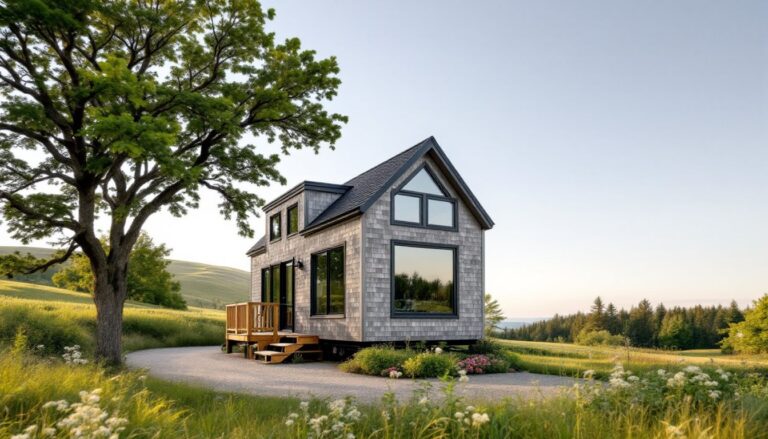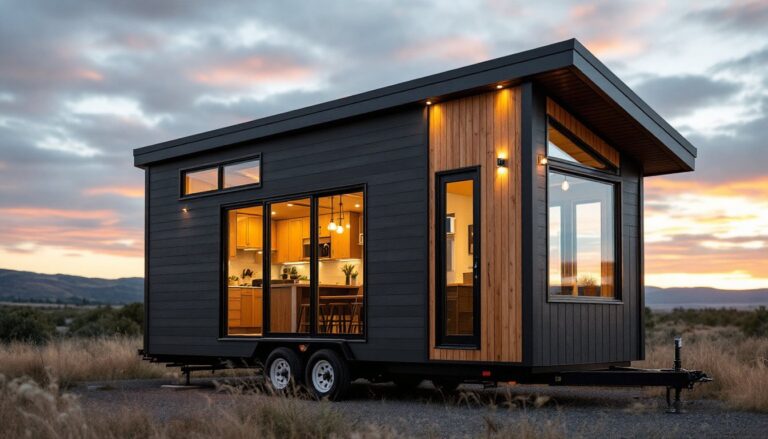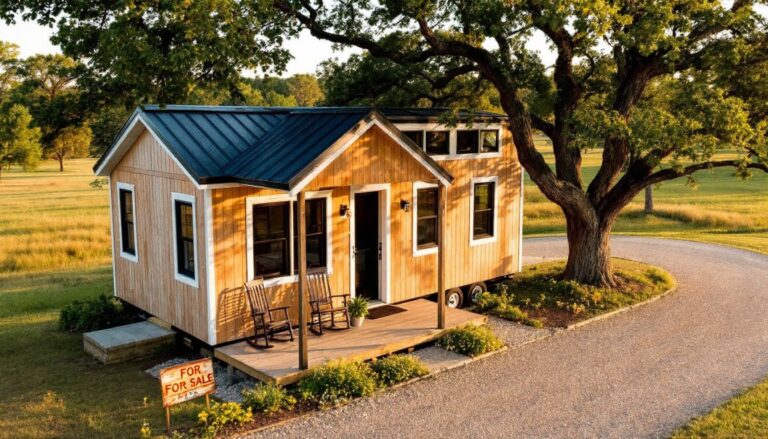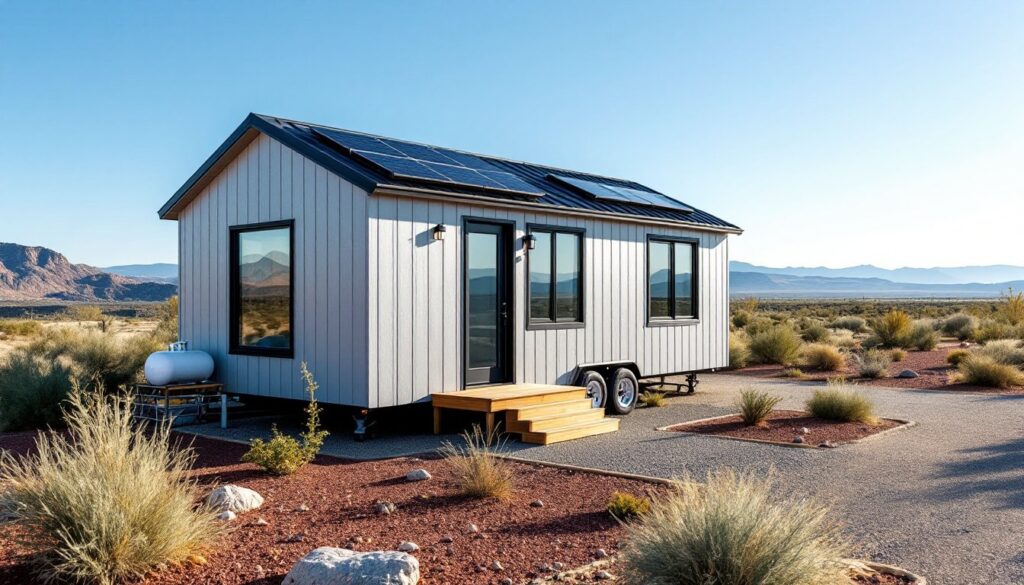

Missouri’s mix of affordable land, relaxed rural regulations, and diverse landscapes makes it a compelling option for anyone considering the tiny home lifestyle. But before you downsize and hit the road, or settle on a foundation, you need to understand the legal framework, costs, and practical realities of tiny living in the Show-Me State. This guide walks through zoning rules, placement options, building considerations, budget breakdowns, and year-round living tips so you can make an well-informed choice without costly surprises.
Table of Contents
ToggleKey Takeaways
- Missouri’s affordable land, relaxed rural regulations, and lack of statewide tiny home laws make it an ideal state for tiny home living, especially in unincorporated counties with minimal zoning restrictions.
- Tiny homes on wheels are classified as RVs in Missouri and require properties zoned for RV living or residence in approved tiny home communities, while foundation-built structures must meet standard building codes and local permit requirements.
- A DIY tiny home on wheels costs $20,000–$36,500 in materials, while foundation-built tiny homes run $29,000–$47,000 with contractor assistance, plus $7,000–$17,000 for well and septic systems on rural land.
- Missouri’s four-season climate demands proper insulation (R-15 walls, R-30+ roof), mini-split heat pumps for efficient heating and cooling, and sealed air barriers to maintain comfort year-round.
- Tiny home communities near Branson, Columbia, and Lake of the Ozarks offer convenient placement options with shared utilities and amenities at $300–$600 monthly lot rent, eliminating land purchase and infrastructure costs.
Why Missouri Is a Great State for Tiny Home Living
Missouri offers a practical blend of affordability, variety, and accessibility that appeals to tiny home enthusiasts. Land prices remain reasonable compared to coastal states, especially in rural counties where acreage under $50,000 is still available. The state’s four-season climate, while demanding, provides the full spectrum of weather conditions, which can be an advantage for testing off-grid systems and building resilience.
The regulatory environment varies widely. Rural areas and unincorporated counties typically have fewer zoning restrictions, while cities like Kansas City and St. Louis enforce stricter codes. This patchwork means flexibility for those willing to do their assignments. Missouri also sits within driving distance of major metros, making it feasible to maintain urban jobs while living small in the country.
Cultural attitudes lean practical. Missourians tend to value self-sufficiency and DIY problem-solving, which aligns well with the tiny home ethos. The state has a growing network of tiny home builders, suppliers, and communities, so you won’t be pioneering alone.
Understanding Missouri’s Tiny Home Laws and Zoning Regulations
Missouri doesn’t have a statewide tiny home law. Instead, regulations fall to county and municipal zoning ordinances, which creates a mosaic of rules. In unincorporated counties, many areas have no minimum square footage requirements, making it easier to place a tiny home on wheels (THOW) or on a foundation. But, you’ll still need to meet International Residential Code (IRC) standards if your structure is on a permanent foundation.
Tiny homes on wheels are typically classified as recreational vehicles (RVs) under Missouri law. To legally occupy one full-time, the property must be zoned to allow RV living or you must be in an RV park or navigating tiny home regulations that permit long-term occupancy. Some counties prohibit permanent RV residency altogether, so check local ordinances before purchasing land.
For tiny homes on foundations, you’ll need to meet the same building codes as traditional houses: foundation inspections, electrical compliance with NEC standards, plumbing permits, and sometimes septic system approvals. Square footage minimums vary, some jurisdictions require at least 600 square feet for a dwelling, while others have no minimum at all.
Permit requirements depend on whether your tiny home is considered an accessory dwelling unit (ADU), a primary residence, or an RV. ADU ordinances are friendlier in some cities, allowing a small second structure on a lot with a main house. Always contact your county’s planning and zoning office before breaking ground or parking a trailer.
Where to Place Your Tiny Home in Missouri
Placement options in Missouri fall into three main categories: private land you own, rented lots in tiny home communities, and RV parks that allow long-term stays.
If you buy land, focus on counties with minimal zoning restrictions. Rural areas in the Ozarks, southwestern Missouri, and northern counties often have fewer hurdles. Before purchasing, verify that the parcel allows the type of dwelling you plan to build or park. Some properties are zoned agricultural and prohibit residential structures outright.
Utility access is critical. Rural parcels may lack municipal water and sewer, requiring a well and septic system. Drilling a well in Missouri typically costs $3,000–$7,000, and septic systems run $4,000–$10,000 depending on soil conditions and system type. Electrical hookup through a rural co-op can add another $5,000–$15,000 if the nearest transformer is far from your site. If you’re planning off-grid living, solar-powered tiny homes are a popular solution in areas with ample sunlight.
Tiny Home Communities and Parks
Missouri has a small but growing number of tiny home villages and RV resorts that welcome long-term tiny dwellers. These communities often provide water, electric, and sewer hookups, plus shared amenities like laundry and community spaces. Monthly lot rent typically ranges from $300 to $600.
Examples include tiny home parks near Branson, Columbia, and the Lake of the Ozarks region. Some communities cater specifically to retirement tiny home residents, offering age-restricted lots and social activities. Before committing, confirm whether the park allows THOWs, requires certification from the Recreational Vehicle Industry Association (RVIA), or mandates certain construction standards.
RV parks are another option, though not all permit year-round occupancy. Look for parks that advertise “extended stay” or “seasonal” lots. Be prepared for occasional pushback, some park owners worry about aesthetic consistency or insurance issues with non-traditional RVs.
Building vs. Buying a Tiny Home in Missouri
Building your own tiny home offers maximum customization and potential savings, but requires significant time, skill, and tool access. A DIY build typically costs $20,000–$40,000 for materials, assuming you’re handy with framing, electrical, and plumbing. You’ll need a circular saw or miter saw for trim work, a drill, level, jigsaw, and ideally a table saw for ripping sheathing and dimensional lumber. Trailer costs run $4,000–$7,000 for a quality steel frame rated for road travel.
If you’re building on a foundation, you’ll need to pour a slab or construct a pier-and-beam system. A 4-inch reinforced concrete slab for a 200-square-foot structure costs roughly $1,200–$2,000 in materials, plus labor if you hire out. Framing with 2×4 studs (actual dimensions 1.5″ × 3.5″) on 16-inch centers is standard, and insulation should meet or exceed Missouri’s climate zone requirements, R-13 to R-15 in walls, R-30 to R-38 in ceilings.
Buying a prefab or custom-built tiny home is faster and often results in better resale value, especially if the builder is certified. Expect to pay $50,000–$80,000 for a turnkey THOW from a reputable Missouri builder, and $40,000–$60,000 for a basic shell you finish yourself. Builders in the Kansas City and St. Louis areas offer both stick-built and modular options. For those exploring urban options, there are tiny homes for sale in Kansas City that may meet your needs.
Whether building or buying, ensure the structure meets ANSI A119.5 standards if it’s a THOW, or local building codes if it’s on a foundation. Structural work, especially anything load-bearing, should involve an engineer or licensed contractor. Missouri building inspectors will flag improper joist spans, undersized beams, and non-code electrical work.
Cost Breakdown: What to Expect When Going Tiny in Missouri
Total costs depend on whether you build, buy, and how you handle utilities and land. Here’s a realistic breakdown for a 200-square-foot THOW and a comparable foundation-built tiny home.
Tiny Home on Wheels (DIY build):
- Trailer: $4,000–$7,000
- Framing lumber, sheathing, insulation: $6,000–$10,000
- Windows and doors: $1,500–$3,000
- Roofing (metal or architectural shingles): $800–$1,500
- Electrical and plumbing materials: $2,000–$4,000
- Interior finishes (drywall, flooring, paint): $3,000–$5,000
- Appliances (mini-split HVAC, propane stove, composting toilet): $3,000–$6,000
- Total DIY THOW: $20,000–$36,500
Tiny Home on Foundation (contractor-assisted):
- Foundation (slab or piers): $2,000–$4,000
- Framing and shell: $10,000–$15,000
- Roofing and siding: $3,000–$5,000
- Electrical and plumbing (with permits): $5,000–$8,000
- Insulation and HVAC: $4,000–$7,000
- Interior finishes and fixtures: $5,000–$8,000
- Total foundation build: $29,000–$47,000
Land and Site Prep:
- Rural lot (1–5 acres): $15,000–$50,000
- Well and septic: $7,000–$17,000
- Electric hookup: $5,000–$15,000
- Gravel driveway and pad: $1,500–$3,000
Ongoing Costs:
- Property taxes: $200–$800/year (varies by county)
- Insurance: $400–$1,000/year (higher for THOWs)
- Utilities (if on-grid): $100–$200/month
Those pursuing bespoke tiny homes with custom finishes and high-end appliances can expect costs to climb above $80,000. Regional material prices fluctuate, so always get current quotes before locking in a budget.
Essential Tips for Living in a Tiny Home Year-Round in Missouri
Missouri’s climate swings from humid, 95°F summers to sub-20°F winters with occasional ice storms. Your tiny home must handle both extremes without turning into an oven or icebox.
Insulation and Air Sealing: Use closed-cell spray foam or rigid foam board in walls and ceilings to hit R-15 in walls and R-30+ in the roof. Seal every penetration, windows, doors, plumbing chases, with caulk or expanding foam. A tiny home’s small volume means heat loss (or gain) happens fast.
Heating and Cooling: A mini-split heat pump is the most efficient option, providing both heating and air conditioning in a single unit. Size it appropriately, most 200-square-foot spaces need a 9,000 BTU unit. Propane or wood stoves work for backup heat, but require proper venting and clearances per NFPA 211. In summer, shade from deciduous trees or a simple awning reduces cooling loads.
Moisture Management: High humidity in Missouri summers can lead to condensation and mold in tight spaces. Install a bathroom exhaust fan vented to the exterior (not into the attic or wall cavity) and use a dehumidifier if needed. Cooking produces moisture too, vent your range hood outside. Design ideas for managing small-space humidity are frequently covered on HGTV, especially in their tiny home series.
Water and Waste: If you’re off-grid, a composting toilet eliminates the need for a septic system. Nature’s Head and Sun-Mar are proven models. For water, a 40–60 gallon freshwater tank is typical for a THOW: refill weekly or hook up to a well. Greywater (from sinks and showers) can drain into a simple gravel pit if local codes allow, or into a small septic system.
Security: Tiny homes are easier to break into than traditional houses, and THOWs can be stolen entirely if not secured. Use wheel locks or hitch locks if mobile, and install quality deadbolts and motion-sensor lighting. For more detailed strategies, explore tiny home security measures tailored to small spaces.
Storage and Organization: Vertical space is your friend. Install cabinets to the ceiling, use under-stair storage, and incorporate furniture with hidden compartments. Small-space organization ideas appear frequently on Apartment Therapy and Southern Living, offering practical solutions for maximizing every square inch.
Permits and Inspections: Even if you built or bought your tiny home out of state, it must meet Missouri’s codes when placed on a permanent site. Schedule inspections for electrical, plumbing, and structural work before closing up walls. Skipping permits invites fines and complicates future resale.
Living tiny in Missouri is entirely feasible, and increasingly popular, but it demands honest preparation and attention to detail. Don’t rush the planning phase, and don’t skimp on insulation or weatherproofing. The state rewards those who do their assignments with affordable land, flexible regulations in the right areas, and a supportive community of fellow tiny dwellers.